Daylighting and potholing in Edmonton
We dig down to your marked lines, so your crew works around a line they've seen, not one they're guessing at.
- 15 hydrovac trucks
- 2 dump trucks and a skid steer
- 24/7 dispatch
- Since 2015
What is daylighting?
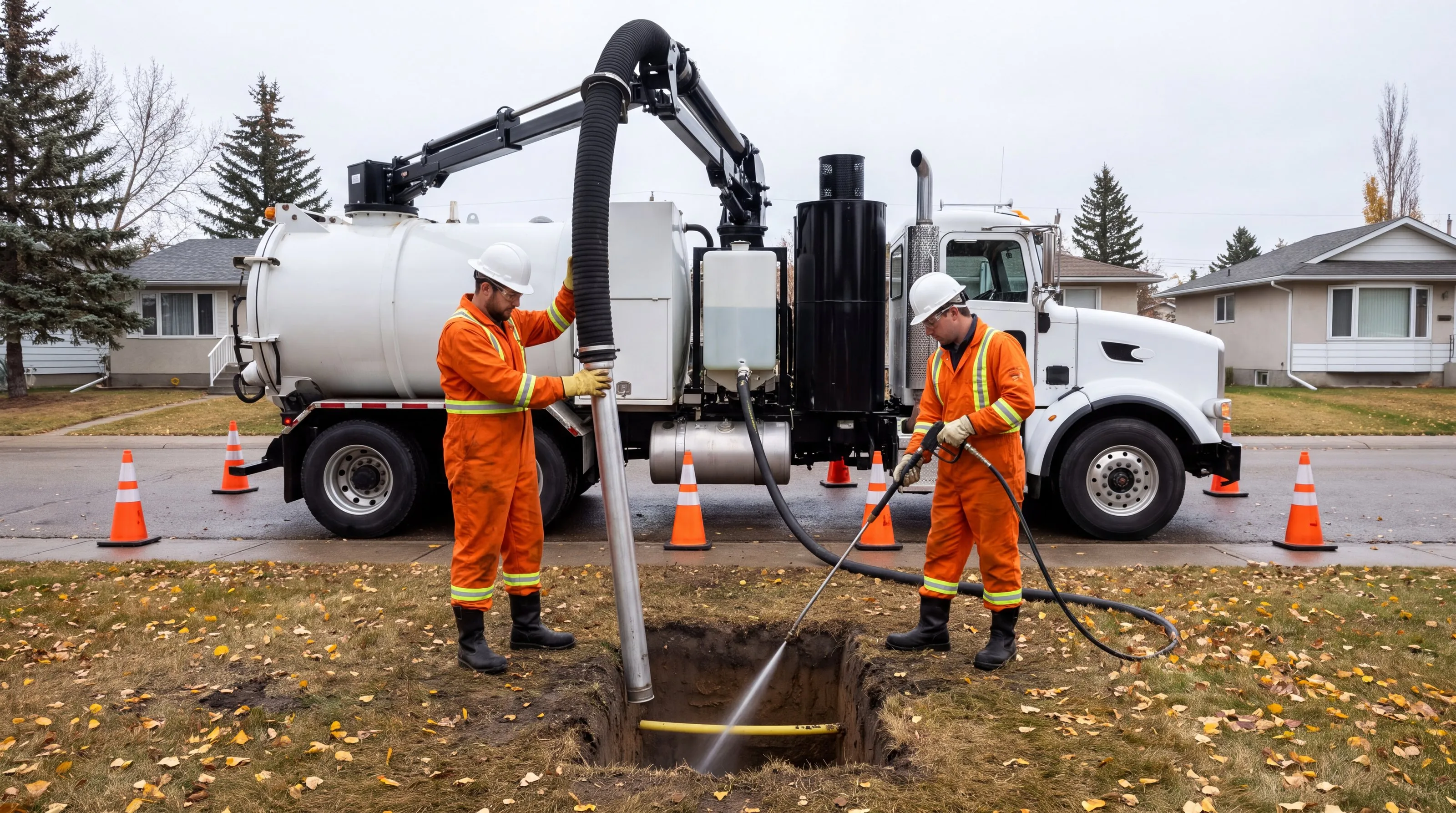
Daylighting means digging down to a buried pipe or cable until it's out in the open, so you can see what it is and measure how deep it sits. You'll also hear it called potholing, utility exposure or daylighting excavation. A hydrovac truck does it with pressurised water and a vacuum.
Book it once the locate marks are down, before the digging around them starts.
When do you need daylighting?
- Before machinery digs near the paint.
Utility and pipeline owners in Alberta ask for what's buried to be exposed by hand or hydrovac first. More on that below.
- Where new work has to clear what's already buried.
Trenches and pile holes often cross an existing pipe or cable. We dig those too: slot trenching and pile holes.
- To get at a service for repair.
A valve, connection or splice that needs replacing.
- When frost has broken a line.
Frost heave puts strain on buried pipes, and water main breaks are common in frost season. We expose the pipe, open up room for the repair, and can often clear the standing water that collects.
- Before a shoring box goes in.
A shored dig generally starts with exposing the service it's there for.
Which utilities do we expose?
Water lines, natural gas and oil pipelines, power cables, and phone and cable lines.
We expose them on civil and municipal jobs, industrial and oilfield sites, and residential work.
How hydrovac daylighting works
Water cuts the soil over the mark, and the vacuum pulls it up into the truck.
As the dig gets close, the operator eases the water and suction right down.
What's down there stays where it is, in the open, for you to check.
Nothing with teeth touches it, so there's less likelihood of damaging it. Where the truck can't get close, remote hose runs from it into tight spaces, basements and existing structures.
Under and around the line
When the work is on the pipe or cable itself, the operator can expose it all the way round, underneath included, so there's room to get at it. That's how a valve, connection or splice gets reached for repair or replacement. The hole stays tight to the job, which generally means less ground shifting around the services beside it, and less to put back in.
Alberta's rules on exposing buried utilities
Every dig in Alberta starts with a locate request through Utility Safety Partners. The Alberta Energy Regulator also asks you to search 30 metres past the edge of the area you're disturbing for pipelines.
Once the marks are down, how close machinery can work depends on what's buried and who owns it. EPCOR asks for a hand or hydrovac exposure within 1 metre of its underground distribution lines. Enbridge asks for its pipelines to be positively identified, by hand or vacuum excavation for example, before machinery works within 5 metres. Near any pipeline, machine digging within 60 cm of it has to be supervised by the pipeline's licensee.
Check what the owner asks for before the job starts. No marks yet? Start with utility locates.
Daylighting in winter
In this part of Alberta, there can be significant frost in the ground for up to five or six months of the year, and it often stops machine digging altogether. Daylighting keeps going, with heated water to get through the frozen layer. More on frozen ground excavation.
What does daylighting cost?
Send us the job and we'll price it. It helps to tell us where the site is, how many lines need exposing, how deep you're digging, and whether the ground's frozen. What hydrovac costs covers what goes into a quote.
Questions people ask
Do I need a locate before you dig?
Yes. Put a locate request in with Utility Safety Partners first. It's free, and they recommend sending it five working days before the job.
Who fills the hole back in?
We do that too: backfilling with our own dump trucks and skid steer.
Can I call outside business hours?
Yes. Dispatch picks up 24/7.
Marks on the ground?
Call dispatch any hour, or send planned work through the quote form.